The Psychology of Guest Engagement: Why Participation Shifts Perception More Than Passivity Ever Could
Guests arrive at events with a plan. Socialize, take photos, get a drink, pick up the goodie bag on the way out. They’re not being cynical, they’re just trying to be efficient in a format they’re familiar with. They’ve attended enough events to know the shape of one, and they move through it accordingly.
What none of that checklist accounts for is the moment something unexpected stops them. It doesn’t have to be a spectacle or a brand ambassador waving them over. How about something something quieter? A process happening nearby that they didn’t anticipate, that turns out to be warm and human and worth a closer look. That’s the moment the checklist disappears. They’re no longer moving through the event. They’re in it.
The difference between a guest who attended and a guest who was truly there isn’t the event format. It’s whether anything gave them a reason to participate on their own terms — and whether they left carrying something that was theirs, not just something they were given. That distinction between a moment delivered and a moment owned is what every event in this post is actually about.
When Nobody Asked Them To
At an EOS press preview, I was stationed behind the counter at the back of the speakeasy bodega. No announcement, no signage pointing guests my way. The shy ones came first — hanging back just behind someone else’s shoulder, watching what was happening. Then one stepped closer. Then two. Then three. A line formed without anyone asking it to.
They were watching was gold foil being pressed onto leather lipstick cases, one at a time, by hand. That last part mattered more than I expected. “By hand?” I heard it multiple times that evening, always in the same tone — somewhere between surprise and recognition, like they’d just caught sight of something they didn’t know they were looking for.
I love these moments. Not because they validate the work, though they do. Because of what happens to a person the instant that sparkle of curiosity takes over. The arms uncross. The phone comes down. They stop being a press guest at another event and start being someone who wants to know more. That shift is the whole thing. Everything else follows from there.
A personalization station that earns its own crowd isn’t doing decoration. It’s doing something much older than branding.
What the Machine Can’t Invite
At a corporate event, two personalization stations ran simultaneously. One was laser engraving. One was me. Guests could choose either, and most sampled both. Watching what happened at each told me more about participation psychology than any single event before or since.
The laser station:
Results were clean, consistent, and immediately impressive
Guests gathered, watched the machine fire, and waited
Once they understood the process, the amazement leveled off
They stood there until it finished, then moved on
The hand engraving station:
Guests discovered there was no character limit, no fixed placement, no template
Questions started: how long did it take to learn? What’s your favorite part?
One guest called across the room to a friend: “Come look, she’s doing this by hand”
“Classic.” “Classy.” Both words pointed at the same recognition — something rare, something that takes years and can’t be replicated by adjusting a machine’s measurements
The difference wasn’t quality. Both stations produced something beautiful. The difference was what each process asked of the guest. One required them to wait. The other gave them something to be curious about — and curiosity, once it lands, pulls people into conversation rather than leaving them standing idly by.
The human touch doesn’t just personalize the item. It gives the guest a reason to stay.
The Brief Decides This, Not the Artist
A personalization station nobody finds isn’t a personalization problem. It’s a placement problem, a signage problem, a timing problem — decisions that belong in the brief, not the debrief.
The conditions that have to be present:
A natural sightline — guests need to discover it, not be directed to it
Signage that matches the venue’s own visual language, not generic event aesthetics
Timing that catches guests when they’re open — arrival or close, not mid-meal or mid-conversation
When those conditions are right, something specific happens in a hospitality setting that doesn’t happen anywhere else. At a Mother’s Day tea at the St. Regis, I offered live calligraphy on notecards for guests. Many were repeat visitors — people who already knew exactly what that hotel felt like, what it promised, what it consistently delivered. When they saw the calligraphy station, they were intrigued. Not because it was flashy, but because it was unexpected inside a context they thought they already knew.
What it communicated was something the hotel had always meant to say: your individual presence here matters. A property that has served thousands of guests found a way to reflect one guest’s specificity back to them in a moment they didn’t anticipate. The hotel’s onlyness meeting the guest’s onlyness.
When the Object Becomes Evidence
At a dinner honoring the 50th anniversary of the Equal Credit Opportunity Act, my role was to gold foil each guest’s own signature onto a Royce New York leather credit card wallet. Not their name in my handwriting. Their signature, rendered permanent in gold on leather they would carry with them.
What happened when guests received their wallet:
Most had never seen gold embossing done before — cameras came out immediately
Several pulled out their ID to compare their real signature to the one on the wallet
The eagerness to post wasn’t about the gift — it was about being seen in that moment
These women had been gifted beautiful things before. This one landed differently.
What the wallet held was proof of their presence at something that mattered — at a moment when their identity was the entire point of the room. A week later, that wallet sitting on a dresser isn’t a reminder of a nice dinner. It’s a reminder of who she was in that room, on that night.
Participation that connects to meaning doesn’t produce a keepsake. It produces evidence.
What the Format Made Possible
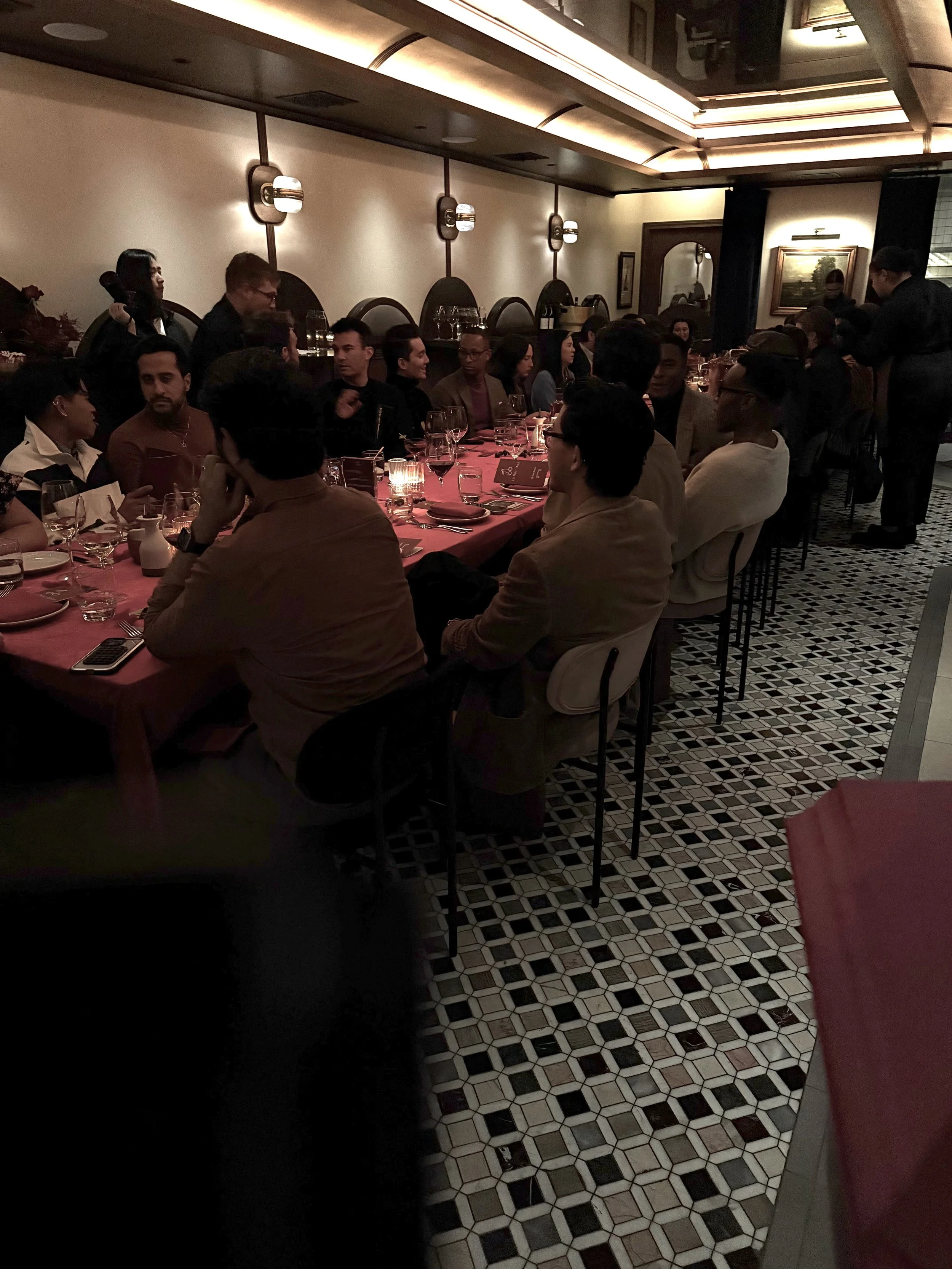
L’Artusi was dimly lit, candles on a long center table, deep curtains lining the walls. About twenty guests, dressed well, music filling the room without drowning it. Industry friends gathering to celebrate Four Roses Bourbon and each other. The kind of dinner where everyone already felt glad to be there before the first course arrived.
My role was live engraving on branded coupe glasses. No crowds, no collective amazement, no line forming without direction. Just one guest at a time.
What that format made possible:
Guests had actual time to think about what they wanted
Conversations opened up naturally, without anyone directing them to the station
The quieter pace created space for something more personal
One guest asked me to engrave her dog’s name. For a water bowl at home. She said it a little tentatively, like she wasn’t sure if that was allowed. I told her it wasn’t the first time I’d gotten that request. Her whole face changed. She laughed, relieved, and we talked for a few more minutes about her dog.
That exchange only happened because the format made room for it. A rushed station, a longer line, a louder room — and she asks for initials like everyone else and moves on. Instead she left with something nobody else at that dinner had, tied to a life nobody else at that dinner knew about.
It’s not just what they leave with. It’s the feeling they’re leaving with.
Designed as a Moment
Every event in this post had a personalization element. Not every one of them was designed as a moment. The ones that landed — where guests crowded in without direction, where cameras came out, where someone shared something personal they didn’t have to share — those weren’t accidents of execution. They were outcomes of intention. Someone decided early enough that the guest’s experience of participation mattered, and then built the conditions for it.
Hospitality managers already understand this at the level of service. The detail in the room, the warmth in the greeting, the memory of a returning guest’s preference — these aren’t line items. They’re demonstrations of a philosophy. Live personalization, designed well and placed with intention, is the same philosophy made visible in real time, in front of the guest, by hand.
The events I remember most — and I think guests remember most — are the ones where we both feel remembered. That doesn’t happen when personalization is booked as a service. It happens when it’s designed as a moment.
If there’s one conversation worth having before your next event brief is finalized, it’s about where that moment lives — and whether the format you’re building gives guests any room to step into it.